
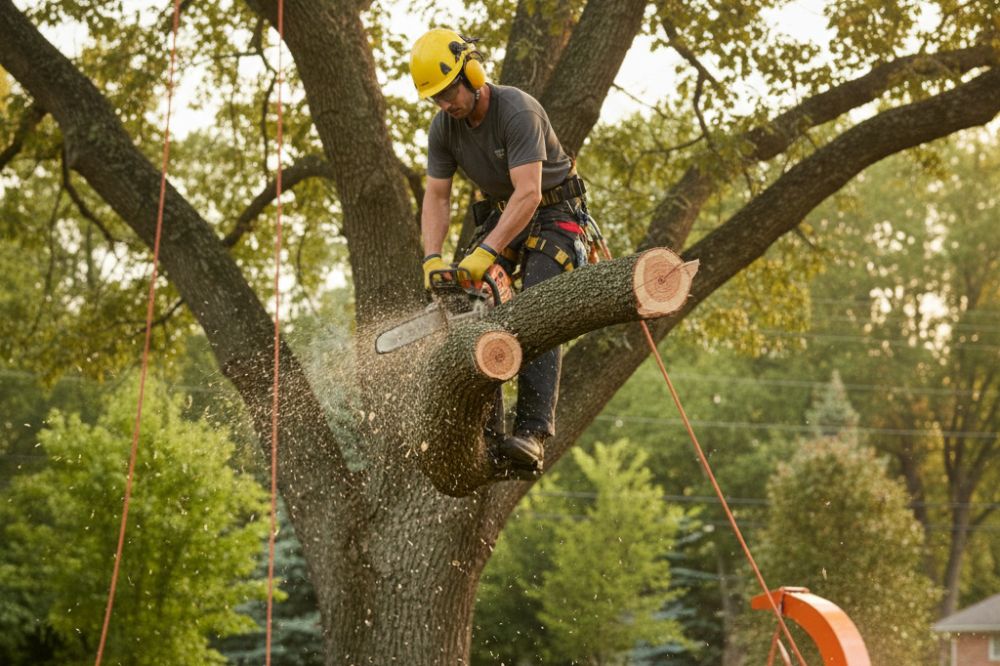
If you've spotted dead branches in tree canopies around your yard, you're right to pay attention. Dead wood doesn't heal. It dries out, turns brittle, and waits for the next storm to bring it down. Here in Metro Atlanta we've got tall pines and wide oaks hanging over driveways and rooflines, so a dead limb isn't a small thing. This guide walks you through how to read what you're seeing and what a pro would do about it.
We handle pruning work all over Cobb, Fulton, Cherokee, Gwinnett, and Forsyth. Dead limbs are one of the most common things homeowners call us about.
What Dead Branches in Tree Crowns Actually Mean
A branch dies when it stops getting what it needs. Sometimes that's shade from the limbs above it, which is normal and happens to the lower branches on almost every mature pine. Sometimes it's storm damage or a bad pruning cut made years ago. Other times it points to root trouble working its way up.
So dead branches in tree canopies are a symptom, and the real question is what's causing them. A few dead lower limbs on a healthy loblolly pine is routine. Dead wood scattered through the top of an oak is a different story, and it usually means something is wrong below the surface.
Can dead tree branches come back to life?
No. Once a branch is dead, it stays dead. Buds won't break on it again and the bark won't knit back together. What can recover is the rest of the tree, which is exactly why clearing the dead wood and fixing the underlying cause is worth doing.
Why does my oak tree have dead branches?
Oaks sitting in Georgia red clay deal with compacted soil and poor drainage, and that puts the roots under stress. Stressed roots can't push water to the far ends of the canopy, so the outer tips die back first. Construction near the trunk or heavy equipment parked over the root zone can start it. Disease is the other common cause, which we cover in our guide to common oak tree problems in Georgia.
How to Tell a Dead Branch From a Dormant One
In winter a bare branch can fool you. Here's the simple test we use:
- Scratch test. Scrape a small spot of bark with your thumbnail. Green or pale moist tissue underneath means it's alive. Brown and dry means it's gone.
- Bend test. A live twig bends. A dead one snaps clean with no give at all.
- Bud check. Live branches carry buds along them even in January. Dead ones are bare, often with peeling or missing bark.
- Look up in June. The easiest check of all. In full summer leaf, any branch with no leaves on it is dead.
Why Deadwooding Matters
Deadwooding is the industry term for pruning dead wood out of a canopy. It's one of the most useful things you can do for a mature tree, and for whatever is parked underneath it.
Safety comes first. A dead oak limb can weigh a couple hundred pounds. It has no flex left in it, so when wind loads it, it breaks instead of bending. Georgia storm season runs hard from spring through late summer, and dead wood is what we find on roofs and cars afterward.
Tree health is the other half of it. Dead wood is an open door for boring insects and decay fungi, and those organisms don't always stay put in the dead section. Given enough time, some move into living tissue and down into the trunk. Pulling dead limbs early keeps that from spreading.
Do dead branches hurt a tree?
A dead branch isn't drawing energy from the tree, so it isn't draining it the way most people assume. The harm is indirect. It's the decay pocket it creates and the wound left behind when it tears off on its own. A clean pruning cut in the right spot seals over. A ragged storm break usually doesn't.
Does trimming dead branches help a tree?
Yes, when it's done right. Taking out dead wood lets the tree close the wound and shuts off an entry point for pests. What doesn't help is cutting into live wood you never needed to touch, or taking the top off the tree. Topping is about the worst thing you can do to a tree, and a good crew will talk you out of it.
Should You Cut Dead Branches Off Your Tree Yourself?
Small stuff you can reach from the ground with a hand saw or a pole pruner is fair game. Keep it to limbs under about two inches thick and stay off ladders.
Past that, call somebody. Here's where it stops being a weekend job:
- Anything that needs a ladder or climbing gear.
- Limbs over a roof, a fence, or a car, where the drop has to be controlled with ropes.
- Anything within ten feet of a power line. That's utility and pro territory, full stop.
- Big pine limbs, which are heavy and tend to tear down the trunk when cut wrong.
Cut placement matters too. You want the cut just outside the branch collar, that slightly swollen ring where the limb meets the trunk. Cut flush and you strip out the tissue the tree needs to seal itself. Leave a long stub and it rots in place. Our tree pruning guide shows what a good cut looks like.
When should you cut dead branches off trees?
Dead wood can come out any time of year, since you aren't cutting live tissue. In practice, late winter is the sweet spot in Georgia. The canopy is open and you beat storm season to it. The exception is a dead limb hanging over something you care about. That one comes out now, whatever the month says.
What Deadwooding Costs Around Metro Atlanta
Price depends on the size of the tree and how hard it is to reach, plus how many limbs have to come out. Rough ranges we see:
- Small ornamental tree, under 25 feet: $200 to $400
- Medium hardwood, 25 to 50 feet: $350 to $700
- Large oak or pine, 50 feet and up: $600 to $1,400
- Several trees in one visit: usually a better per-tree rate
Tight backyard access, a limb hanging over a roof, or a spot a bucket truck can't get to will push a job toward the top of its range. If the canopy needs more than dead wood pulled out of it, crown thinning or a crown reduction may be the better call.
When Dead Branches Mean the Tree Has to Go
Sometimes dead wood is the warning rather than the problem itself. Signs the tree may be past saving:
- More than about a third of the canopy is dead
- Dead wood concentrated at the very top, which often signals root failure
- Mushrooms or shelf-like conks on the trunk or root flare
- A hollow sound when you knock on the trunk, or soft punky wood
- A new lean, or cracked soil lifting on one side of the base
If that sounds like your tree, read is my tree dead or dying before you spend money pruning it.
Get a Free Estimate
Dead branches in tree canopies are easy to ignore right up until one comes down. If you've got limbs you're unsure about, we'll come look, tell you straight whether it's a prune or a removal, and give you a number before any work starts. The estimate is free.
Call Stanton Tree Service at (470) 914-3402 or read more about our tree trimming and pruning services. We're a licensed and insured family business serving Metro Atlanta.