
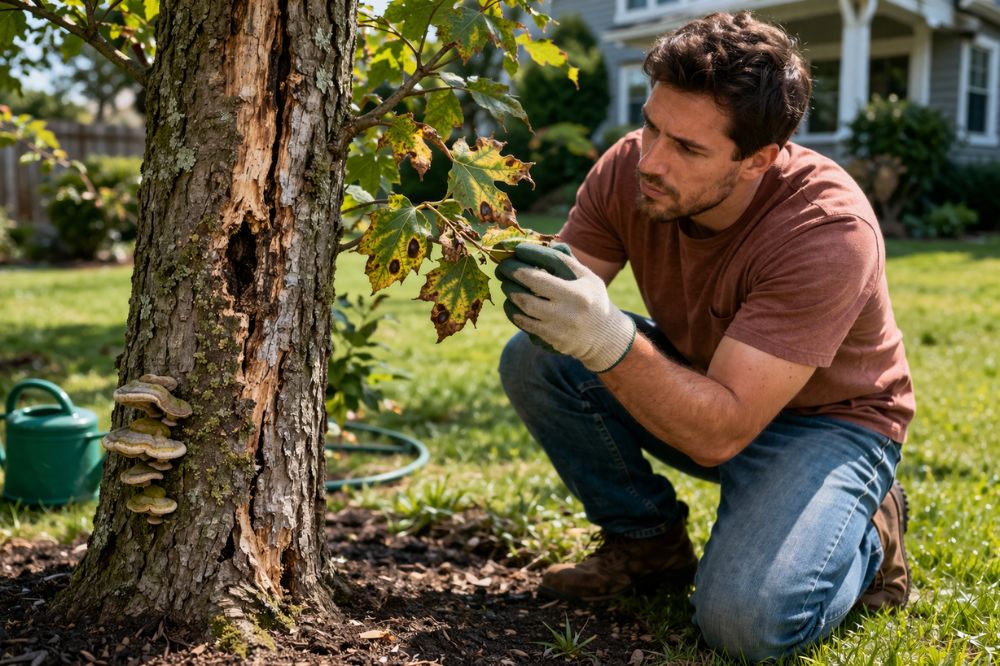
Trees can't tell you when they feel off, so you have to read the clues. Learning how to tell if your tree is sick early on can save the tree, save you money, and keep a big limb from landing on your roof. Here in Metro Atlanta, our oaks, pines, and crape myrtles deal with heavy clay soil, long humid summers, and storm after storm. That mix stresses trees and opens the door to trouble.
The good news is that most sick trees give you plenty of warning. You just have to know what to look for. Let's walk through the signs, one part of the tree at a time.
Start with the leaves
Leaves are the easiest place to catch problems. A healthy tree in summer should be full and green. When something's wrong, the leaves usually show it first.
Here are the leaf signs of a sick tree to watch for:
- Yellow, brown, or spotted leaves in the middle of the growing season
- Wilting or curling when the ground isn't dry
- Leaves that come in smaller than normal
- Bare spots where leaves never filled in this spring
- Leaves dropping early, well before fall
One yellow leaf here or there is nothing. A whole section going pale or dropping in June is worth a closer look. Spots that spread, or a powdery coating, often point to a fungus, and Georgia's damp heat makes fungus a common problem.
Check the branches and canopy
Step back and look at the whole tree. A healthy canopy is thick and even. If you can see a lot of sky through the top, that thinning is a red flag.
Watch for branches that stay bare while the rest of the tree leafs out. Dead limbs mixed in with living ones tell you part of the tree is struggling. Snap a small twig. If it's brittle and brown inside instead of green and bendy, that branch is gone.
When the dieback starts at the top and works down, the tree is often fighting something at the roots or in the trunk. That's a sign to take seriously.
Look hard at the trunk and bark
The trunk holds a lot of answers. Walk all the way around it and run your eyes from the base up.
Mushrooms or shelf-like fungus growing on the trunk or over the roots is one of the clearest signs of trouble. That usually means the wood inside is rotting, even if the outside still looks solid. Trees like that can fail without much warning.
Other trunk signs of tree disease include:
- Cankers, which are sunken or dead patches on the bark
- Oozing sap or dark, wet-looking streaks
- Bark that's peeling, cracking, or falling off in sheets
- Sawdust piles or small round holes from boring insects
Those little holes matter here. Borers and beetles go after stressed pines and oaks all over Cobb, Fulton, and Gwinnett counties, and by the time you see the holes the bugs are usually already inside.
Common tree problems in Georgia yards
Some issues show up again and again around Atlanta. Pines that turn brown from the top down are often dealing with beetles or root stress after a wet season. Oaks can pick up fungal leaf diseases and slow decline, especially older ones that got their roots damaged during a build or a driveway job.
Crape myrtles get a white, powdery coating on the leaves, and many now carry crape myrtle bark scale, which leaves a black sooty film on the branches. None of that means the tree is doomed. It just means it needs attention before things get worse.
If you're not sure whether you're looking at a sick tree or one that's already too far gone, our guide on whether your tree is dead or dying can help you tell the difference.
What's treatable and what isn't
Catching things early is everything. A lot of sick trees bounce back with the right care.
Usually treatable:
- Leaf diseases and mild fungus, often handled with pruning and better airflow
- Pest problems caught before they spread through the whole tree
- Dead or crossing limbs that can be cleaned out with good tree trimming and pruning
- Stress from poor watering, bad soil, or crowded roots
Harder to fix, or too far gone:
- Rot deep in the trunk with fungus showing on the outside
- More than half the canopy dead
- Large cankers wrapped around the main stem
- Root rot that's already loosened the tree in the ground
When a tree reaches that point, it can become a hazard. If yours is dropping big limbs or leaning, read up on the signs you need problem tree removal before it fails on its own.
Simple ways to keep trees healthy
Most tree problems trace back to stress, and a lot of that stress is preventable. Give your trees a little help and they'll shrug off far more.
A few things that go a long way:
- Water deeply during dry spells, especially young trees and through Georgia's hot late summers
- Mulch a ring around the base, but keep it a few inches off the trunk so it doesn't hold rot against the bark
- Protect the roots during any yard project, since packed-down soil and cut roots do slow, hidden damage
- Prune out dead or rubbing branches before disease has a place to settle in
Small habits like these keep your trees strong enough to fight off the fungus and bugs that come with our climate.
When to call a pro to diagnose it
You can spot most warning signs yourself. Figuring out the exact cause, and whether the tree is worth saving, is where a trained set of eyes pays off.
Call a pro if you see mushrooms on the trunk, a fast decline, a big section dying back, or a lean that wasn't there before. A certified arborist can tell you if it's a sick tree you can treat or one that needs to come down for safety. Guessing wrong in either direction gets expensive.
At Stanton Tree Service, we've helped Atlanta homeowners sort out sick and struggling trees since 2018. We're licensed, insured, and family-run, and we'll give you a straight answer. If something in your yard looks off, call us at (470) 914-3402 for a free estimate and we'll take a look.