
Both terms get used interchangeably, but stump grinding and stump removal are two very different things. One is the right call for 95% of Atlanta homeowners. The other is more expensive, more disruptive, and rarely necessary. This guide explains the difference, what each process actually involves, and how to decide which one your yard needs.
The Short Answer
Choose stump grinding if:
You want the stump gone, the yard flat, and the problem solved -- without excavating your yard. This covers the vast majority of residential jobs in Metro Atlanta.
Choose stump removal (full extraction) if:
You're replanting a large tree in the exact same spot, installing a structural foundation, or have a specific reason you cannot leave any root material underground.
What Is Stump Grinding?
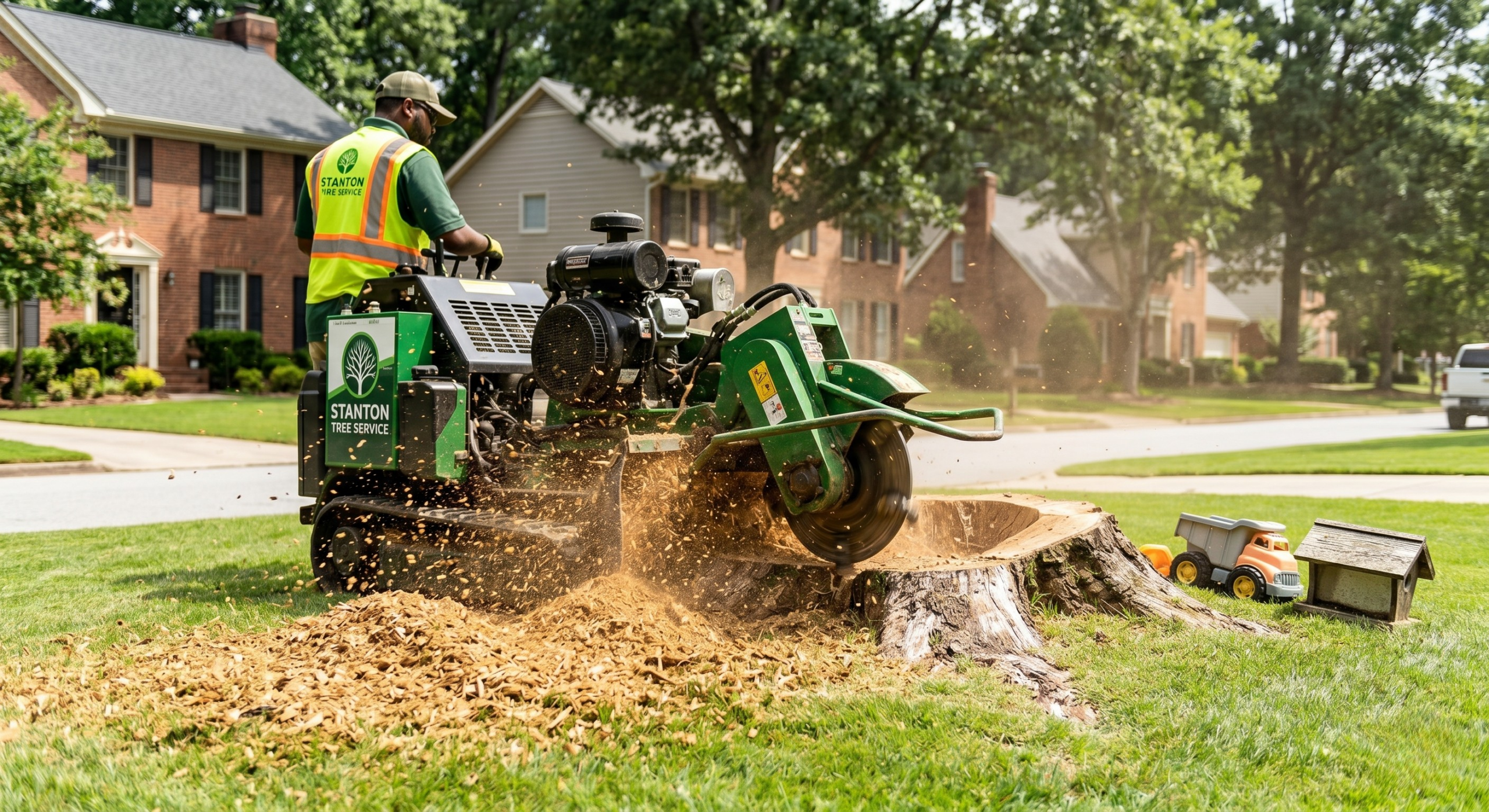
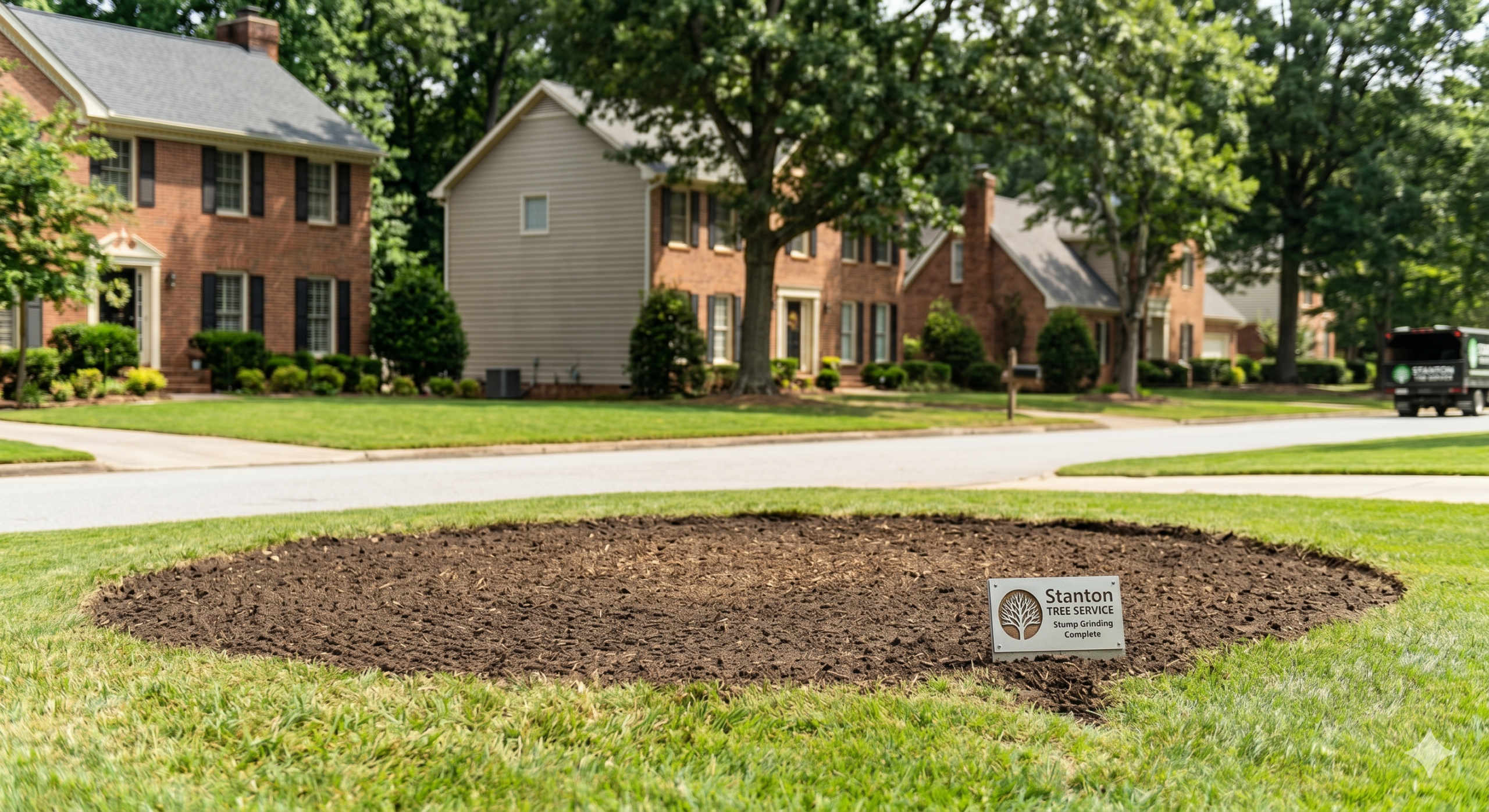
Stump grinding uses a hydraulic machine with a spinning cutting wheel to grind the stump and its root crown down 6 to 12 inches below grade. The result is a flat, mulch-filled depression where the stump used to be.
- What's removed: The visible stump and root crown (the growth center of the tree)
- What stays underground: The lateral root system, which decomposes naturally over 1-5 years depending on species
- What's left at the surface: A pile of wood chips, which can be used as mulch or hauled away
Without the root crown, the tree cannot regenerate. Grinding is permanent. The underground roots simply decompose on their own -- no action needed from you.
What Is Stump Removal (Full Extraction)?
Full stump removal means digging out the entire stump and root ball -- not just the visible part, but the mass of roots that extends into the surrounding soil. This typically requires an excavator, a skid steer, or a combination of heavy equipment and manual digging.
- What's removed: The entire stump plus the root ball (can extend 3-8 feet out from the trunk base)
- What's left at the surface: A large hole that must be backfilled
- Equipment required: Excavator or skid steer -- much heavier machinery than a stump grinder
Full extraction leaves no underground material behind, which is why it's the right call when you're pouring a foundation or need completely clean soil. But for most homeowners, it's overkill -- and significantly more expensive and disruptive.
Stump Grinding vs. Stump Removal: Side-by-Side Comparison
| Factor | Stump Grinding | Full Stump Removal |
|---|---|---|
| Average Cost (Metro Atlanta) | $75 - $400 | $300 - $1,000+ |
| Time to Complete | 30 min - 2 hrs | 2 - 6 hrs+ |
| Equipment | Stump grinder | Excavator or skid steer |
| Yard Disruption | Minimal | Significant (large hole, possible lawn damage) |
| Roots Left Behind | Yes (decompose naturally) | No |
| Can Plant Grass Over It? | Yes | Yes (after backfilling) |
| Can Plant a New Tree? | Near the spot, yes | In the exact same spot, yes |
| Right For Most Homeowners? | Yes | Rarely |
Why Stump Grinding Is Right for Most Atlanta Yards
It solves the actual problem
The stump is gone. The yard is flat. You can sod over it, plant a garden bed, run a fence line, or build a patio -- all of the typical reasons homeowners want stumps removed are fully addressed by grinding. The decomposing roots underground are not a problem. They don't sprout (the root crown is gone), they don't move, and they don't affect what you build above them for standard residential use.
It doesn't tear up your yard
A stump grinder is a precise machine. The footprint of the work is the stump itself plus a few feet of operating clearance. Your lawn, your beds, your irrigation -- they stay where they are. Full extraction with an excavator is a different story. The machine has to get in, the root ball has to come out, and the resulting hole and surrounding soil disturbance can be substantial, especially for large hardwoods with aggressive root systems like oak or sweetgum -- both extremely common in Metro Atlanta.
The underground roots don't cause structural issues
This is the question we hear most often. Left-behind roots do not damage foundations, pipes, or driveways -- they are dead and decomposing. Live tree roots can cause damage over decades of active growth, but once the tree is down and the root crown is ground away, that growth stops. The decomposing roots actually improve soil structure as they break down.
It's dramatically cheaper
Stump grinding for a medium-sized residential stump in Cobb, Fulton, or Cherokee County runs $150-$280. Full extraction for the same stump starts at $400 and can easily reach $800-$1,000+ for large hardwoods. Unless you have a specific technical reason for full extraction, the extra cost buys you very little practical benefit.
When Full Stump Removal Actually Makes Sense
There are legitimate scenarios where full extraction is the right call:
- You're replanting in the exact same spot. Grinding leaves decomposing root material at 6-12 inches depth. If you want to plant a new tree in the same hole, the decomposing material and altered soil chemistry can interfere. Full extraction gives you clean soil.
- You're pouring concrete or building a structure over the spot. A deck footer, slab, or retaining wall needs solid, stable ground. Decomposing wood underground creates voids and settling. In this case, full extraction -- or grinding plus deep backfill with compacted material -- is the right engineering call.
- The root system is actively damaging infrastructure. This is rare in the context of a freshly removed tree (because the root growth stopped when the tree died), but if an existing root system is already under a foundation or pipe and you're addressing it proactively, partial root removal may be warranted.
What About Chemical Stump Removal?
Chemical stump killers -- potassium nitrate and similar products -- accelerate decomposition and are sold at home improvement stores. They work, eventually. The timeline is months to years, not days. During that time, the stump is still there, still visible, still a trip hazard, and still potentially sending up sprouts from lateral roots.
Chemical treatment is best viewed as an option for stumps in out-of-the-way locations where you have time and don't need the ground cleared quickly. For front yards, areas you're landscaping, or anywhere appearance matters: grinding is faster and more final.
Atlanta-Specific Notes: Local Tree Species and What They Mean for Your Stump
The trees common to Metro Atlanta have a few characteristics worth knowing:
- Loblolly pine: Fast to grind, soft wood, decomposes quickly. Grinding is always the right call. Root system is wide but breaks down within 1-2 years.
- Water oak / Willow oak: Dense, slow-grinding hardwood. Root systems are massive. Full extraction of a large oak root ball is a significant excavation job -- and rarely necessary for residential use. Grinding is the practical choice.
- Sweetgum: Aggressive surface roots that spread wide and shallow. Sweetgum stumps need to be ground deep (10-12 inches) to fully stop regrowth, since the root system is so extensive. Still grinding, not extraction -- just deeper.
- Bradford pear: Small, easy to grind. If you're removing a Bradford pear (a wise choice -- they're invasive and structurally weak), grinding is simple and quick. These trees resprout aggressively from roots, so grinding is actually more effective than chemical treatment for pear stumps.
- Crape myrtle: Fast to grind but also fast to resprout if any root crown material is left. Make sure your crew grinds to full depth on crape myrtle stumps -- 8-10 inches minimum.
Frequently Asked Questions
Will underground roots keep growing after stump grinding?
No. Without the root crown -- which the grinder removes -- the tree has no mechanism to continue growing. Lateral roots left in the ground will die and decompose. You may see a few weak sprouts in the first season from smaller lateral roots, but they'll die off quickly without the crown to sustain them.
How long do underground roots take to decompose after grinding?
It depends on the species and soil conditions. Pine roots often break down within 1-2 years in Metro Atlanta's warm, humid climate. Hardwood roots (oak, hickory) may take 5-10 years for the larger structural roots, though the process is gradual and doesn't cause surface problems.
Can I plant a garden or lay sod right after stump grinding?
Yes, with one step: remove excess wood chips from the ground surface before adding topsoil. Wood chips deplete nitrogen as they break down, which can starve grass. Rake or shovel out the bulk of the chips, add 2-4 inches of topsoil, and seed or sod normally. The ground below will settle slightly over the first year -- add topsoil to level it off as needed.
Does stump grinding prevent the tree from coming back?
Yes. Grinding destroys the root crown, which is the tree's regenerative center. Without it, the tree cannot produce new growth. This is a key advantage over chemical stump killers and over simply cutting a tree to ground level -- both of which leave the root crown intact and allow sprouts to emerge for years.
Ready to Get Rid of That Stump?
Stanton Tree Service handles stump grinding across Cherokee, Cobb, Forsyth, Fulton, Gwinnett, and Paulding counties. Most residential stumps are done in under two hours -- same-week scheduling available in most areas.
Have a specific situation and not sure which approach fits? Call us -- we'll tell you straight.
Free quotes. No runaround. (470) 914-3402
Get a Free Estimate