
Georgia storm season sneaks up fast. One week the sky is clear, and the next a line of thunderstorms is rolling through Cobb, Fulton, Cherokee, Gwinnett, and Forsyth counties with sixty mile an hour gusts behind it. If you have been wondering how to protect trees from storms before the next one hits, the honest answer is that the work has to start weeks or months ahead, not the night a storm watch pops up on your phone. A little prep now can be the difference between a tree that bends in the wind and one that ends up on your roof or your car.
We have pulled a lot of trees off houses and fences in Metro Atlanta over the years, and almost every time there were warning signs that showed up long before the storm did. Here is what we tell our neighbors when they ask how to get their yard ready.
Why Georgia Trees Struggle in Storm Season
Georgia red clay does not drain well, and it does not let roots spread out the way sandy or loamy soil does. A lot of our pines and oaks end up with roots that stay shallow and wide instead of going deep. That works fine on a calm day, but it falls apart once the ground gets soggy from a week of rain and a storm rolls in with strong, gusty wind. The soil turns soft, the roots lose their grip, and a tree that looked perfectly healthy goes over.
Pines are usually the first to fail because they are tall, shallow rooted, and brittle in high wind. Oaks tend to hold up better, but a big oak with a cracked limb or a hollow trunk is just as dangerous when a storm moves through, maybe more so because of the sheer weight coming down.
How to Protect Your Trees From Storms Before the Season Ramps Up
The single best thing you can do to protect trees from storms is get a good look at every tree on your property before storm season gets going, usually late winter into early spring here in Georgia. Walk your yard and check for these things:
- Dead or hanging branches, especially anything over the roof, driveway, or a spot where kids play
- A trunk that leans more than it used to, or new leaning after a rainy stretch
- Cracks or splits where a big limb meets the trunk
- Mushrooms or fungus growing at the base of the tree, which can mean root rot
- Bark that is peeling, cracked, or missing in patches
- Thin, sparse leaves compared to nearby trees of the same type
If you spot any of that, do not wait. A tree with a structural problem does not get safer on its own. Our guide on whether a leaning tree is dangerous walks through how to tell if a lean is normal growth or a real problem.
Prune Before the Wind Does It For You
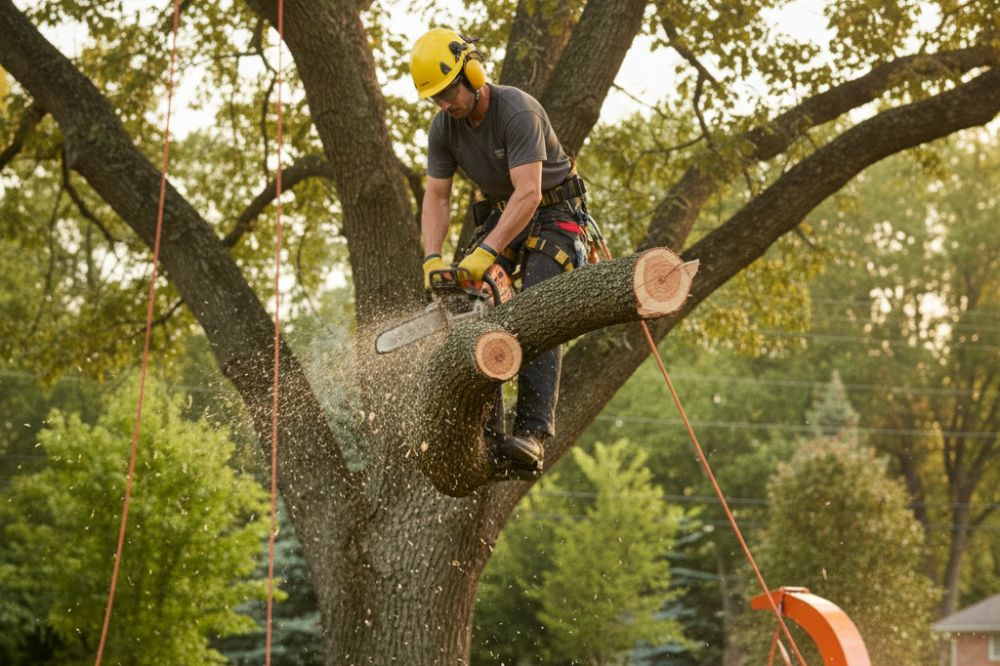
Pruning is probably the most useful thing a homeowner can do to protect trees from storms, and it is also the most skipped. A tree with a full, heavy canopy and long, weak limbs catches wind like a sail. Thin that canopy out, remove dead wood, and cut back branches that are too long for their diameter, and you take a lot of the strain off the tree.
This is not the same as topping a tree, which actually makes it weaker and more likely to fail later. Proper pruning is selective. It removes what is dead, damaged, or poorly attached, and it opens the canopy so wind passes through instead of pushing against it. If you are not sure what needs to come off and what should stay, our tree pruning guide covers the difference between a cut that helps and one that hurts. Late winter, when trees are dormant, is usually the best time for a bigger pruning job, but a hazard limb should not wait for the "right" season.
Deadwooding Matters More Than People Think
Dead branches are dry, brittle, and heavier than they look once they start to rot from the inside. They do not bend in the wind, they just snap. Pulling dead wood out of a tree every year or two removes some of the most dangerous material a storm can send flying.
Cabling and Bracing for Trees With Weak Spots
Sometimes a tree is otherwise healthy but has a weak union, like two big trunks growing close together with a narrow, included crotch between them. That structure is prone to splitting in high wind. Cabling and bracing adds physical support, usually a steel cable installed high in the canopy, to limit how far those limbs can move. It is not a fix for every tree, but for the right one it can add years of safe life instead of a removal.
Do Not Forget the Roots
A tree is only as stable as what is holding it in the ground. Compacted soil, roots cut during a driveway or pool project, and roots damaged by grade changes all weaken a tree's anchor. Keep a layer of mulch, two to three inches and not piled against the trunk, over the root zone to help the soil hold moisture and stay looser. Avoid parking heavy equipment over root zones, and think twice before trenching near a mature tree for irrigation or utility work.
If a tree already looks unhealthy, our page on how to tell if your tree is sick can help you figure out whether it is treatable or past saving.
What to Do in the Days Before a Storm Hits
Once a storm watch is posted for Metro Atlanta, your options get a lot more limited, but a few things are still worth doing:
- Walk the yard once more and look for anything new, like a fresh crack or a sagging limb
- Move cars and outdoor furniture away from trees with known weak spots
- Secure anything loose that could blow into a tree or get thrown by falling limbs
- Note which trees near your house or power line worry you most, so you can check them first afterward
This is also the point where it is too late for major pruning work. Crews get backed up fast once severe weather is in the forecast, and climbing a tree in gusty conditions is not safe. This is why the real work of protecting your trees from storms happens weeks ahead, not the day before.
When a Tree Is Too Far Gone to Save
Sometimes a tree needs to come down before storm season instead of getting trimmed. A pine with a hollow base, an oak with major root rot, or a tree already leaning hard toward your house is not a good candidate for cabling or pruning. Removing it before a storm is a lot cheaper, and safer, than dealing with it after it has fallen. If a storm does get ahead of you, we cover the cleanup side of things in our guide to storm damage tree removal in Atlanta.
Get a Free Look at Your Trees Before the Next Storm
Every yard in Metro Atlanta is a little different, and the only real way to know how to protect your trees from storms this season is to have someone walk the property and look at species, age, root conditions, and any structural issues. Stanton Tree Service offers free estimates, and our crew can tell you honestly whether a tree needs pruning, cabling, or removal, or whether it is fine as is.
Give us a call at (470) 914-3402 and we will get you scheduled for a free estimate before the next round of Georgia storms rolls through.