
If you are searching for stump grinding before and after photos to decide whether to remove that unsightly tree stump in your Atlanta yard, you are not alone. Homeowners across the Southeast want to see real transformations before they commit to a service. This article walks you through everything you need to know: what the process looks like, how much it costs, what happens to the ground over time, and how to plan your landscaping afterward. By the time you finish reading, you will have a clear picture of what professional stump grinding delivers and whether it is the right choice for your property.
Table of Contents
- Why Homeowners Search for Stump Grinding Before and After Photos
- The Stump Grinding Process: What Happens During the Job
- Real Stump Grinding Before and After Transformations
- Stump Grinding Cost vs. Full Removal: Is It Worth It?
- What Happens After Stump Grinding: The Settlement Timeline
- Post-Grind Landscaping: What to Do With the Area
- Stump Grinding for Different Tree Species: What to Expect
- Stump Grinding Safety and Equipment Considerations
- Seasonal Considerations for Stump Grinding in Atlanta
- Frequently Asked Questions About Stump Grinding Before and After
- Choose Stanton Tree Service for Professional Stump Grinding in Atlanta
Why Homeowners Search for Stump Grinding Before and After Photos
The first thing most people want when considering stump grinding is visual proof. A stump is a stubborn, immovable object that dominates a yard. It is hard to imagine the space without it. Before and after photos answer the most basic question: will my yard look clean and usable when the job is done? The answer, in nearly every case, is yes. A professionally ground stump leaves a level surface, not a crater or a mess.
For Atlanta homeowners, the need for visual validation is even stronger. Our clay-heavy soil behaves differently than the loamy or sandy soils you might see in demonstration videos from other parts of the country. Local before and after galleries show results in conditions that match your own yard. They also demonstrate a company’s ability to handle different stump sizes, tree species, and challenging locations — like stumps wedged against fences or foundations. The transformation from a tripping hazard and eyesore to a smooth, grass-ready patch of ground is the primary reason people move forward with the service.
The Stump Grinding Process: What Happens During the Job
Understanding what happens during stump grinding helps set realistic expectations. The process is fast, loud, and surprisingly contained when handled by professionals.
Equipment and Safety Preparation
Professional crews use hydraulic stump grinders that attack the stump from the top down. The cutting wheel spins at high speed, chipping away wood in small increments until the stump is reduced to a pile of chips and the main root mass is severed below ground level. Before the machine ever starts, the operator marks underground utilities, clears the area of rocks and debris, and puts on full safety gear. Hearing protection is mandatory because the machine produces noise levels above 85 decibels. Eye protection, steel-toed boots, and heavy-duty gloves are standard.
Atlanta’s clay soil adds a layer of complexity. When dry, clay is hard and can dull cutting teeth faster than softer soils. When wet, it becomes heavy and sticky, making cleanup more labor-intensive. Experienced local operators know how to adjust their approach based on ground conditions.
Grinding Depth and Technique
The industry standard for grass preparation is grinding to a depth of 4 to 6 inches below ground level. This removes the stump’s main structural mass and creates enough room for topsoil and healthy root growth for new grass. Larger stumps from hardwoods like oak or maple may require multiple passes or a more powerful machine to reach the target depth. The operator works in a pattern from the outer edge of the stump inward, controlling the direction of wood chips with containment panels or tarps to keep the mess contained.
Cleanup and Chip Management
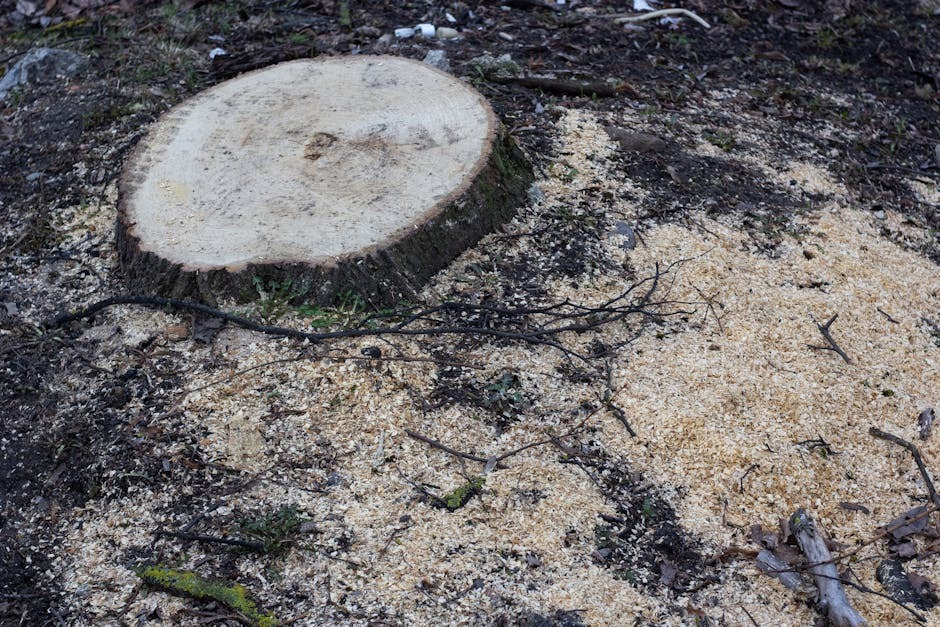
Wood chips are the main byproduct of stump grinding, and the volume can be surprising. A single large-diameter stump can produce enough chips to fill a large pickup truck multiple times over. Most professional crews offer to remove the chips from the site entirely or spread them elsewhere on the property as mulch. After the grinding is complete, the area is raked level. There should be no visible stump remnants above ground — just a clean depression filled with a mix of soil and fine wood particles.
Real Stump Grinding Before and After Transformations
The best way to understand the impact of stump grinding is to look at real scenarios. Every job is different, but the end result is consistently a cleaner, safer, and more usable yard.
Single Stump Removal: The Most Common Scenario
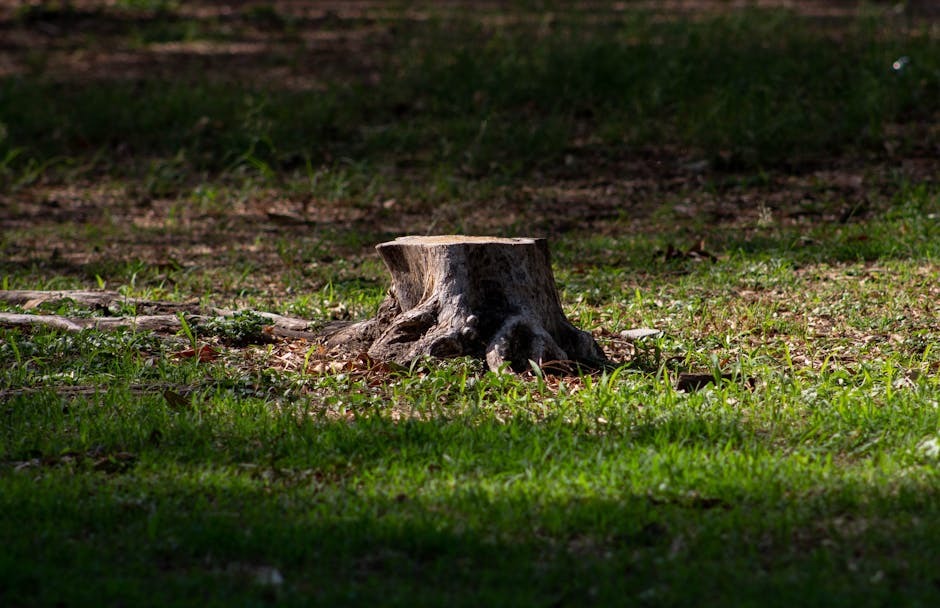
Most homeowners have one or two stumps to address. Before the job, a single stump — typically 6 to 24 inches in diameter — sits in the middle of a lawn or near a driveway, surrounded by grass or landscaping. It is a visual anchor that draws the eye for all the wrong reasons. After grinding, that same spot is a clean, mulched depression filled with topsoil. It can be seeded or sodded within days. In an Atlanta context, imagine a 20-inch oak stump near a driveway entrance. Before photos show a cracked, weathered stump forcing the family to mow around it. After photos show a seamless lawn with no trace of the obstruction.
Multi-Stump Jobs: Clearing Entire Properties
Some properties need more extensive work. After a storm, a construction project, or years of deferred maintenance, a yard can have dozens of stumps. Professional crews have documented jobs with 57, 60, and even 80 stumps removed in a single project. Before photos show a landscape cluttered with obstacles. After photos reveal a completely clear, level lot ready for new landscaping, hardscaping, or even new construction. The transformation at this scale is dramatic and opens up possibilities that felt out of reach before.
Challenging Locations: Near Fences, Foundations, and Utilities
Stumps do not always grow in convenient open spaces. They can press against fence lines, crowd house foundations, or sit directly under power lines. Before photos in these situations often look hopeless, with the stump appearing intertwined with structures. Professional operators use smaller, more maneuverable equipment and precise technique to grind the stump without damaging surrounding features. After photos show clean removal with fence posts still solid, foundations uncracked, and utility lines untouched. This precision work is one of the strongest arguments for hiring a professional instead of attempting a DIY approach.
Stump Grinding Cost vs. Full Removal: Is It Worth It?
Cost is a major factor in the decision between stump grinding and full removal. Stump grinding averages $175 to $475 per stump, while complete removal — which involves digging out the entire root ball — runs from $300 to $1,000 or more. The price difference comes down to labor and equipment. Grinding is a faster process that leaves the underground root system in place to decompose naturally. Full removal requires heavy excavation equipment, more time, and often leaves a large hole that needs filling.
Several factors influence the cost of grinding. Stump diameter is the most obvious — larger stumps take more time and produce more chips. Accessibility matters too: a stump in a fenced backyard with a narrow gate costs more than one in an open front yard. Tree species plays a role because hardwoods like oak and hickory are denser and take longer to grind than softwoods like pine or poplar. For Atlanta homeowners, grinding is almost always the more practical and cost-effective choice. Our clay soil makes full root ball excavation especially difficult and expensive. Grinding leaves the roots to decompose naturally, which saves money upfront. The trade-off is that you may see some settling over time, but for most people, that is an acceptable compromise.
What Happens After Stump Grinding: The Settlement Timeline
The ground does not stay exactly as it looks on the day of grinding. Understanding the settlement timeline prevents surprises and helps you plan your landscaping.
Immediate Results (Days 1 to 7)
Right after grinding, the area looks level but feels soft underfoot. The depression is filled with a mix of wood chips and soil. There is no visible stump above ground. You can add topsoil and seed within a few days. Light watering helps the soil settle and keeps dust down while you prepare for the next steps.
Short-Term Changes (3 to 6 Months)
Light settling begins within the first few months. As wood chips and small root fragments decompose, the ground may develop a slight depression of one to two inches. This is completely normal and expected. The organic material is breaking down and the soil is consolidating. Plan to add additional topsoil during this period to keep the area level.
Long-Term Decomposition (6 Months to 2 Years)
The most visible sinking happens between six and twelve months after grinding. Deep root systems from large trees — especially oaks and pines common in Atlanta — can take up to two years to fully break down. During this period, you might notice mushrooms or other fungi growing in the area. This is a sign of healthy decomposition and is not a cause for concern. The fungi are breaking down the remaining wood material. After two years, the ground should be stable and ready for permanent landscaping.
Post-Grind Landscaping: What to Do With the Area
Once the stump is gone, you have a blank canvas. What you do next depends on your goals for the space.
Preparing for Grass or Sod
If you want a seamless lawn, start by removing excess wood chips from the surface. Wood chips deplete nitrogen from the soil as they decompose, which can starve new grass. Fill the depression with topsoil, mounding it slightly to account for future settling. Apply a nitrogen-rich fertilizer to balance the carbon-to-nitrogen ratio from any remaining buried chips. Then seed or lay sod immediately. Grass roots will help stabilize the soil and speed up the integration of the area into the rest of your lawn.
Alternative Landscaping Options
Grass is not your only option. The decomposed wood chips will improve soil structure over time, making the area ideal for a garden bed. You can plant flowers, shrubs, or vegetables once the initial settling period passes. If you want hardscaping — like a patio, pathway, or retaining wall — you can build once settling is complete, or excavate deeper to install a stable base immediately. For a new tree or shrub, wait at least one to two years to avoid root competition and settling issues. If you want an immediate feature with no waiting, consider a fire pit, bird bath, or decorative rock installation.
Common Problems and Solutions
Mushrooms and fungi are the most common post-grind concern. They are harmless and indicate decomposition is underway. Remove them if they bother you, or let them run their natural cycle. Persistent settling is another issue — simply add topsoil annually for the first two years until the ground stabilizes. If you see sprouts emerging from remaining roots, apply a targeted herbicide to the cut root ends. Grinding deeper can also resolve persistent regrowth.
Stump Grinding for Different Tree Species: What to Expect
Not all stumps are created equal. The species of tree affects how quickly the stump grinds down, what the chip texture looks like, and how fast the remaining roots decompose. Softwoods like pine, poplar, and cedar grind faster and produce finer chips. They decompose more quickly, often within a year. Hardwoods like oak, maple, and hickory are denser and require more powerful equipment and more time to grind. Their chips are coarser and take longer to break down.
In Atlanta, the most common species are Southern pines, live oaks, and sweetgums. Pines are relatively easy to grind but have extensive root systems. Live oaks are dense and can be slow going. Sweetgums present a unique challenge because of their aggressive surface roots, which may require deeper grinding to prevent future issues.
Stump Grinding Safety and Equipment Considerations
Stump grinders are heavy, powerful machines with rotating cutting wheels that can cause serious injury. Only trained operators should use them. Professional crews wear hearing protection, safety glasses, steel-toed boots, and gloves on every job. Before any grinding begins, underground utility lines must be located and marked. Hitting a gas, water, or electrical line is dangerous and expensive to repair.
There are different types of grinders for different jobs. Walk-behind models work well for smaller stumps and tight spaces. Tow-behind or tracked grinders handle larger jobs and commercial-scale work. Equipment maintenance matters for consistent results. Well-maintained machines deliver clean, efficient work and reflect a company’s commitment to quality.
Seasonal Considerations for Stump Grinding in Atlanta
Timing your stump grinding project can make the process smoother and the results better. Spring and fall are ideal in Atlanta. Temperatures are moderate, the ground is usually dry, and conditions are perfect for seeding grass right after grinding. Summer grinding works but requires extra attention to watering if you are establishing new grass in the heat. Winter grinding is possible, and dormant grass means less disruption to the lawn, though frozen ground can make the work more difficult.
Wet conditions present the biggest challenge. Atlanta’s clay soil becomes slippery and heavy when saturated. Avoid scheduling grinding during or immediately after heavy rain. The best practice is to schedule grinding two to four weeks before your planned seeding date. This gives you time for soil preparation and allows the initial settling to occur before you plant.
Frequently Asked Questions About Stump Grinding Before and After
Yes. Grinding is cost-effective, removes a decay hazard that can attract pests, and restores usable yard space. It is almost always the better choice for homeowners compared to full removal.
The area is level and covered with a mix of soil and fine wood chips. There is no visible stump above ground. The roots remain underground to decompose naturally.
Light settling begins at three to six months. Most visible sinking occurs between six and twelve months. Full decomposition of deep roots can take up to two years.
Yes. Remove excess wood chips, add topsoil, apply a nitrogen-rich fertilizer, and seed or sod immediately.
No. Grinding removes the above-ground portion of the tree. Remaining roots may produce small sprouts, but they will not regenerate a full tree.
The industry standard is four to six inches below ground level.
Choose Stanton Tree Service for Professional Stump Grinding in Atlanta
Stanton Tree Service is locally owned and operated in Atlanta, Georgia. We know the soil, the tree species, and the challenges that come with properties in this region. Our pricing is competitive and detailed, with no hidden fees for stump diameter or accessibility. Every job is handled by fully insured operators using modern, well-maintained equipment. Contact us today for a free estimate and see the difference professional stump grinding makes for your Atlanta property.