
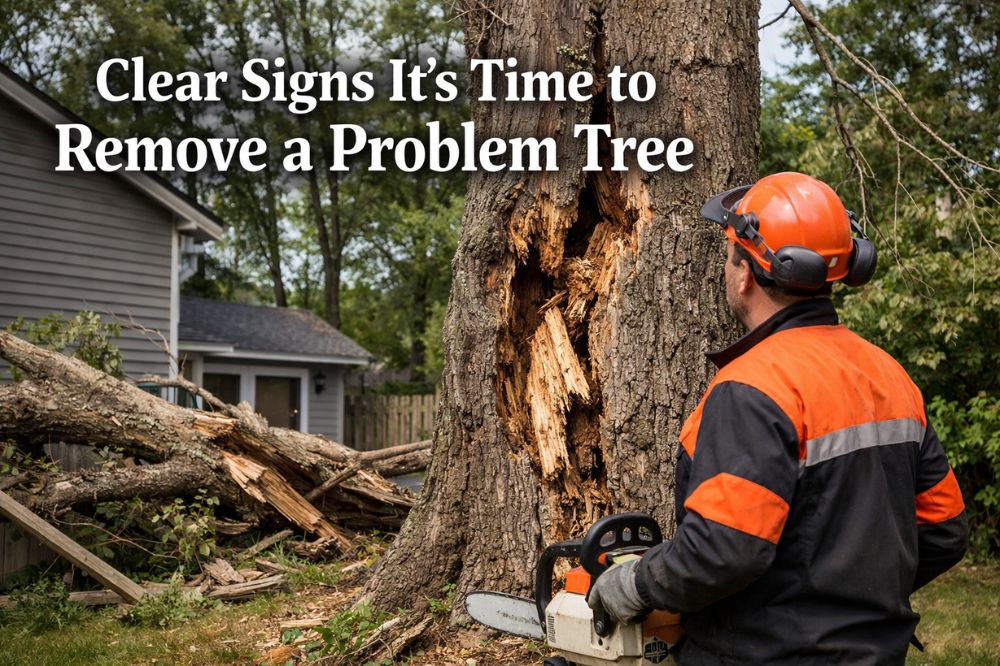
Every fall we get the same call from somewhere in Cobb or Gwinnett. "There's a big oak over my roof and I don't know if it's safe." Sometimes it is. Sometimes it isn't, and that's when hazardous tree removal stops being a someday project and turns into a this-week one. The trouble is that most homeowners can't tell the difference from the driveway, and plenty of tree companies will call anything a hazard if it gets them a job. Here's how we actually decide, and who gets the final say.
What makes a tree hazardous?
A hazardous tree needs two things at once: a defect that makes it likely to fail, and a target it would hit when it does. Arborists call this the target-plus-defect rule, and it's the whole game.
A rotten 70-foot pine at the back of a two-acre lot in Cherokee County isn't a hazard. It's a future snag that woodpeckers will love. The same pine 30 feet from your kitchen is a different story. Nothing about the tree changed. The target did.
So the first question we ask isn't "is this tree sick?" It's "what's under it?" Your house, the neighbor's garage, the driveway where the kids ride bikes, the power line to the street. If the answer is "nothing but grass," you have time. If the tree is already cracking or hanging over one of those targets, stop reading and call for emergency tree removal in Atlanta. Otherwise, keep going.
The 7 defects we check before hazardous tree removal
When we walk a yard in Marietta or Johns Creek, we look for the same seven problems every time. One of them alone might be fine. Two or three on a tree over a target, and we'll tell you it needs to come down.
- A new or growing lean, especially with cracked or heaving soil on the uphill side. A tree that has always leaned is usually fine. A tree that started leaning after last month's storm is not. Our post on leaning trees walks through the difference.
- A cavity or hollow in the trunk. Tap it with a rubber mallet. A healthy trunk sounds dull. A hollow one rings. If more than a third of the trunk diameter is gone, the tree has lost most of its strength.
- Root plate damage. Mushrooms at the base, roots cut during a driveway or sewer job, or soil lifting on one side. Roots hold the tree up, and in Georgia red clay they sit shallow to begin with.
- Deadwood over a target. A dead limb bigger than your forearm hanging over the roof is a hazard on its own, even if the rest of the tree is healthy.
- Cracks in the trunk or major limbs. A vertical seam you can fit a finger into means the wood has already started to separate.
- Included bark, which is the tight V where two trunks meet. Bark grows into the joint instead of wood, so the union has almost no strength. Bradford pears and water oaks split here constantly.
- Fungus or conks on the trunk. Shelf fungus means the wood inside is rotting, and by the time you can see it the rot has usually been working for years.
Dead trees get their own rule. A dead pine in Metro Atlanta starts dropping limbs within a year and can snap at the trunk within two. If you're not sure whether yours is dead or just stressed, scratch a twig with your thumbnail. Green underneath means alive. Brown and dry means the clock is running.
Who decides a tree is hazardous?
Short answer: you do, with help. No county inspector comes out and condemns a tree on private property. The decision runs through three people.
First, you. You see the tree every day. If it's shedding bark or leaning more than it used to, trust that.
Second, a tree professional or certified arborist. We look at the seven defects above and give you a straight opinion. A good company will tell you when a tree is fine, because we'd rather trim it this year and remove it in ten than scare you into a job. Ask for the reasons in plain words. If a quote feels pushy, get a second one.
Third, the city. Atlanta, Sandy Springs, Roswell and a few other cities require a permit to remove a healthy tree over a certain size, but most of them exempt dead or hazardous trees if an arborist puts the reasons in writing. That letter is worth having. It gets you around the permit wait, and it protects you if an insurance adjuster asks questions later. Our guide to the signs a tree needs to go covers more of what we put in those letters.
Does insurance pay for hazardous tree removal?
Usually not while the tree is still standing. Homeowners insurance treats a hazardous tree as maintenance, the same as a worn roof. You pay to take it down.
The math flips once it falls. If the tree lands on your house, fence, car or deck, most policies cover removing the part that did the damage, plus the repair. The catch is the word "known." If an adjuster can show you were told the tree was hazardous and did nothing, they can deny the claim. Keep any arborist report you get. We go deeper on this in our post on whether homeowners insurance covers tree removal.
What about a neighbor's dangerous tree?
Georgia follows a knowledge rule. If your neighbor's tree falls on your property and nobody knew it was a problem, it's your insurance claim. If your neighbor was told in writing that the tree was hazardous and ignored it, their liability coverage can be on the hook.
So write the letter. Keep it polite and attach a photo. Send it certified mail. Most neighbors take care of it once they see it on paper. The ones who don't have now been put on notice, and that changes who pays.
What hazardous tree removal costs in Metro Atlanta
Hazard trees cost more than healthy ones of the same size. Dead wood won't hold a climber, so the crew works from a bucket truck or rigs every piece down slowly, and sometimes a crane is the cheapest safe option. Rough bands for our area:
- Small hazard tree under 30 feet, open access: $400 to $900
- Medium tree, 30 to 60 feet, near a structure: $900 to $2,000
- Large dead or hollow tree over 60 feet above a house: $1,500 to $3,500
- Crane-assisted removal with no drop zone: $2,500 to $6,000
- After-hours or storm emergency work: add 20 to 40 percent
Stump grinding is quoted separately, and hauling is not always included, so ask. A written quote should spell out each of those lines. If you're comparing bids for tree removal in Atlanta, make sure each one covers the same scope before you look at the number.
Frequently Asked Questions
Can I cut down a hazardous tree myself?
If it's taller than your house or anywhere near something you care about, no. If it's dead, also no. Dead trees are unpredictable even for pros. Felling a 60-foot pine in a quarter-acre Smyrna yard with a borrowed chainsaw is how people end up in the emergency room. Small trees in open ground, sure. Anything else, hire it out.
How fast does a hazardous tree need to come down?
A dead pine or a tree with a fresh crack over a house should come down within days, before the next storm. A tree with one defect and no target can wait for a normal schedule, often a few weeks. We'll tell you which bucket yours is in when we look at it.
Do I need a permit to remove a dead tree in Atlanta?
Inside the city of Atlanta you still file a dead, dying or hazardous tree application with the city arborist, but there is no recompense fee when the condition is documented. Most suburbs have a similar exemption. Check with your city before the crew arrives, and keep the arborist letter.
Not sure which kind of tree you've got? Call Stanton Tree Service at (470) 914-3402. We'll come out anywhere in Metro Atlanta, look at the tree, tell you honestly whether it's a hazard or just ugly, and leave you a free written estimate either way.